Home / Refacing Versus Replacing Cabinets in Irvine Tract Homes
Refacing Versus Replacing Cabinets in Irvine Tract Homes
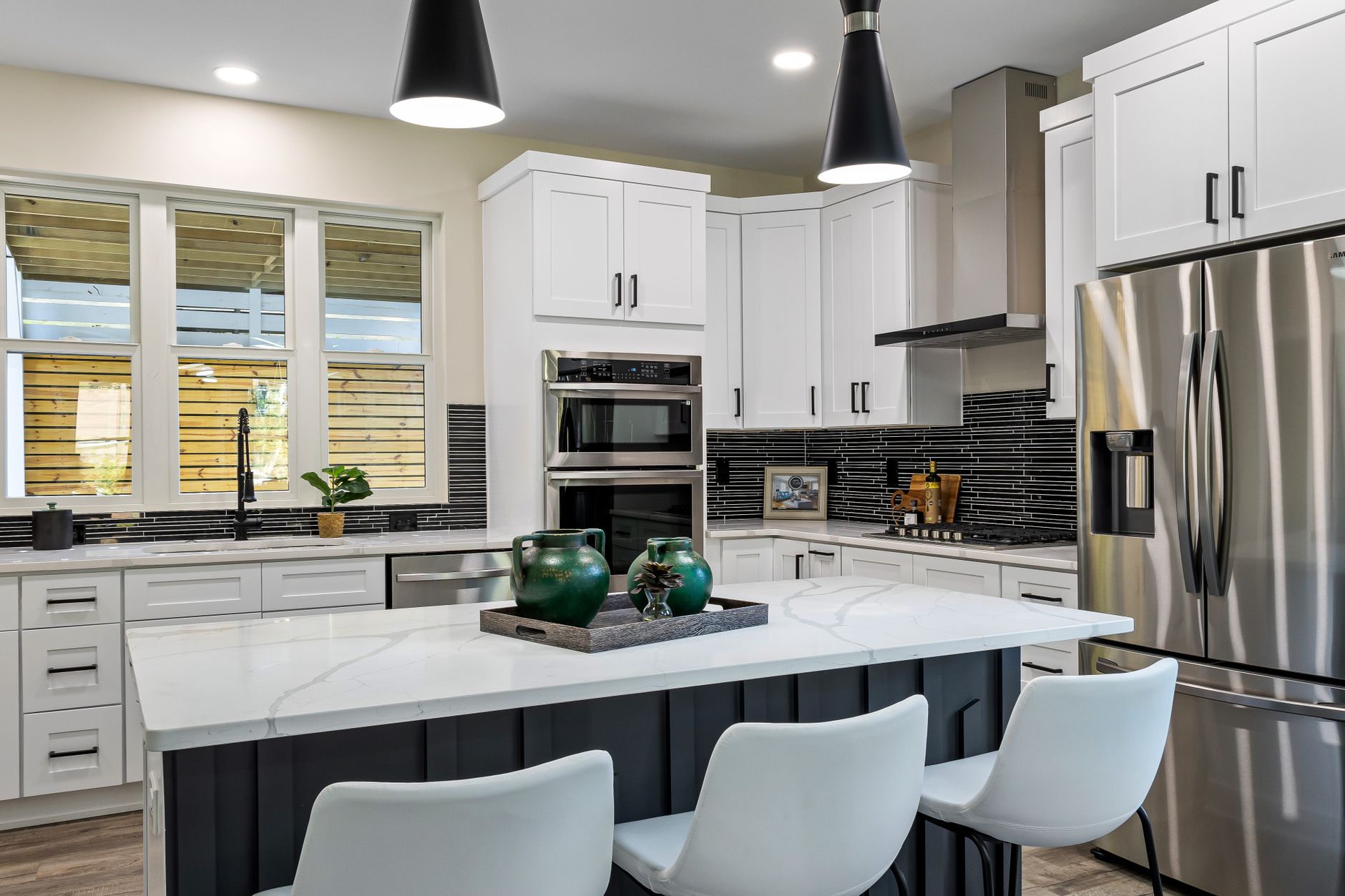
Picture a single-story house in Woodbridge, bought from the original owners, with a kitchen that still has the honey oak doors the builder hung decades ago. The drawers stick a little, one sink-base panel has a stain, and the layout is a tidy U shape that works fine for two cooks. The question most Irvine homeowners in this spot ask first is not about colors or hardware. It is whether those original boxes deserve another twenty years, or whether they should come out entirely.
Refacing keeps the cabinet boxes where they are and changes everything you see: doors, drawer fronts, the face frames and the exposed side panels. Replacement removes the boxes and installs new ones. Both can produce a kitchen that looks finished and current. The right answer depends on what is underneath the surface, and on whether the current footprint is one you actually want to keep.
Why Irvine tract kitchens are good refacing candidates
Many homes across Irvine were built in the 1970s and 1980s as planned villages, laid out by the Irvine Company with repeating floor plans. Northwood, Turtle Rock and University Park all have large stretches of these tract houses. Builders of that era often used face-frame cabinets with solid wood frames and plywood or particleboard sides, and many of those boxes have held up surprisingly well because the dry Mediterranean climate of Orange County is gentle on wood. Long spells of low humidity mean less swelling and fewer failed glue joints than kitchens in damper regions tend to show.
A face-frame cabinet is the type that has a hardwood rectangle on its front, with the doors hinged to that frame. This construction suits refacing well, because the frame gives a sturdy, flat surface for new veneer and a solid place to mount new hinges. Frameless boxes can be refaced too, but the work is mostly a door and drawer front swap, since there is no frame to cover.
Checking the boxes before deciding
Refacing only makes sense when the structure is sound. Before anyone talks about door styles, empty a few cabinets and look closely. These are the checks that tend to settle the question:
- The sink base floor. This is where decades of small leaks collect. Press on the bottom panel. If it flexes, feels soft, or the particleboard has puffed up and crumbles at the edges, that box needs repair or replacement before any new face goes on it.
- Shelf sag. Long upper shelves that bow in the middle can usually be fixed by adding a center support or replacing the shelf itself. Sag alone rarely condemns a cabinet.
- Face frame joints. Look at the corners where the vertical and horizontal pieces of the frame meet. Tight joints are a good sign. Open, wobbly joints suggest the frame will not hold new hinges reliably.
- Wall attachment. Upper cabinets should be screwed firmly through their back rails into wall studs. If an upper box shifts when you push on it, that needs correcting no matter which route you choose.
- Toe kick condition. The recessed strip at the bottom of the base cabinets takes mop water, pet bowls and kicked shoes. Damage here is common and usually easy to replace with a new kick board during refacing.
If most boxes pass and only one or two fail, a common approach is to replace just the damaged units, typically the sink base, and reface the rest so everything matches. The new box gets built to the same dimensions and receives the same veneer and doors as its neighbors.
What refacing can change, and what it cannot
Being clear about limits saves disappointment later. Refacing changes the look of a kitchen a great deal. New doors in a shaker profile, slab style or raised panel, fresh wood veneer or a painted finish on the frames, soft-close hinges, new drawer fronts and modern drawer pulls can make a 1978 kitchen look like it was built last year.
What refacing does not change is geometry. The boxes stay the same width, the same depth and the same height. The sink stays where it is, and so does the opening for the range and the refrigerator. If the original builder left a narrow refrigerator space that no longer fits a modern full-depth model, refacing will not widen it. If you want a deeper pantry cabinet or a wall of tall storage where a short base and upper used to sit, that is new cabinetry, not refacing.
Interior function can improve somewhat. Drawer boxes can be swapped for new ones on full-extension slides, and roll-out trays can be added inside base cabinets. Those upgrades fit inside the existing boxes.
The height question in older Irvine kitchens
Many original builder kitchens from that period have upper cabinets that stop well short of the ceiling, sometimes with a decorative gap above them or a short soffit. Refacing can leave the uppers at their current height and finish the top with crown molding, which closes the visual gap and makes the cabinets look taller and more built in. Some homeowners add a short stacked cabinet above each upper, either new matching boxes or glass-front units, to fill the space. That is a partial addition rather than pure refacing, but it works with the existing boxes rather than replacing them.
Base cabinet height can matter too. Older bases are sometimes slightly lower than current norms, especially after a thick new countertop goes on or flooring gets built up. Measure from the finished floor to the top of the box. If a new stone counter will bring the work surface to an awkward height, adjusting the toe kick or replacing the bases may be worth the extra effort.
Materials used on the new faces
Refacing veneers come in several forms. Real wood veneer is a thin sheet of actual wood, usually glued to the frames and side panels with a pressure-sensitive adhesive, then finished to match the new doors. Laminate and rigid thermofoil skins offer a uniform painted look over a substrate such as medium-density fibreboard. Thermofoil is a vinyl layer heat-formed over a door, and it tends to perform well in a mild Orange County kitchen, though it should be kept away from direct heat from a self-cleaning oven or a toaster pushed against a door.
Painting the existing frames instead of veneering them is another route. A proper job involves cleaning, deglossing, a bonding primer and a sprayed topcoat. Spray painting usually gives a smoother result than brushing on cabinet frames, but it requires careful masking inside the kitchen. Painted frames combined with new painted doors make a convincing refreshed look on a smaller scope.
When replacement is the better call
There are clear signals that replacement makes more sense for a tract kitchen in Irvine:
- Multiple boxes have water damage, swollen bottoms or broken frames.
- The layout itself is the problem: the work triangle is awkward, the refrigerator space is too small, or storage is in the wrong places.
- You plan new flooring under the cabinets, a new countertop shape, or appliance changes that need different box sizes.
- The original boxes are thin particleboard throughout, with sides that crumble around hinge screws.
Replacement takes longer, generates more debris and involves more trades, since countertops almost always come off and plumbing and electrical need reconnecting. In exchange, it lets the kitchen be redesigned around how the household cooks now.
Timing and disruption
One reason many Irvine families lean toward refacing is that the kitchen stays usable for most of the project. Countertops typically remain in place, the sink keeps working, and the appliances stay connected. The bulk of the work is done one run of cabinets at a time, with doors installed near the end. That matters for a household with children at school or a parent commuting to University of California, Irvine or offices near Irvine Spectrum Center who still needs breakfast made each morning.
A full replacement means the kitchen is out of service for longer. Planning a temporary setup in a garage or dining room, with a microwave, a small refrigerator and a folding table, helps. Some families picnic at William R. Mason Regional Park on the dustiest days.
A practical way to decide
Start with the box inspection. If the structure is good and the layout works, refacing is usually the sensible route and keeps a solid, decades-old cabinet in service. If the structure is mostly good but one or two units have failed, mix replacement of those units with refacing for the rest. If the layout is the real complaint, no amount of new veneer will fix it, and replacement is the honest answer.
Whatever direction makes sense, get the inside of the cabinets inspected before committing to a door style. In an Irvine tract home, the best-looking result usually comes from respecting what the original builder did well and fixing only what truly fell short.