Home / Pull Length and Drawer Width
Pull Length and Drawer Width
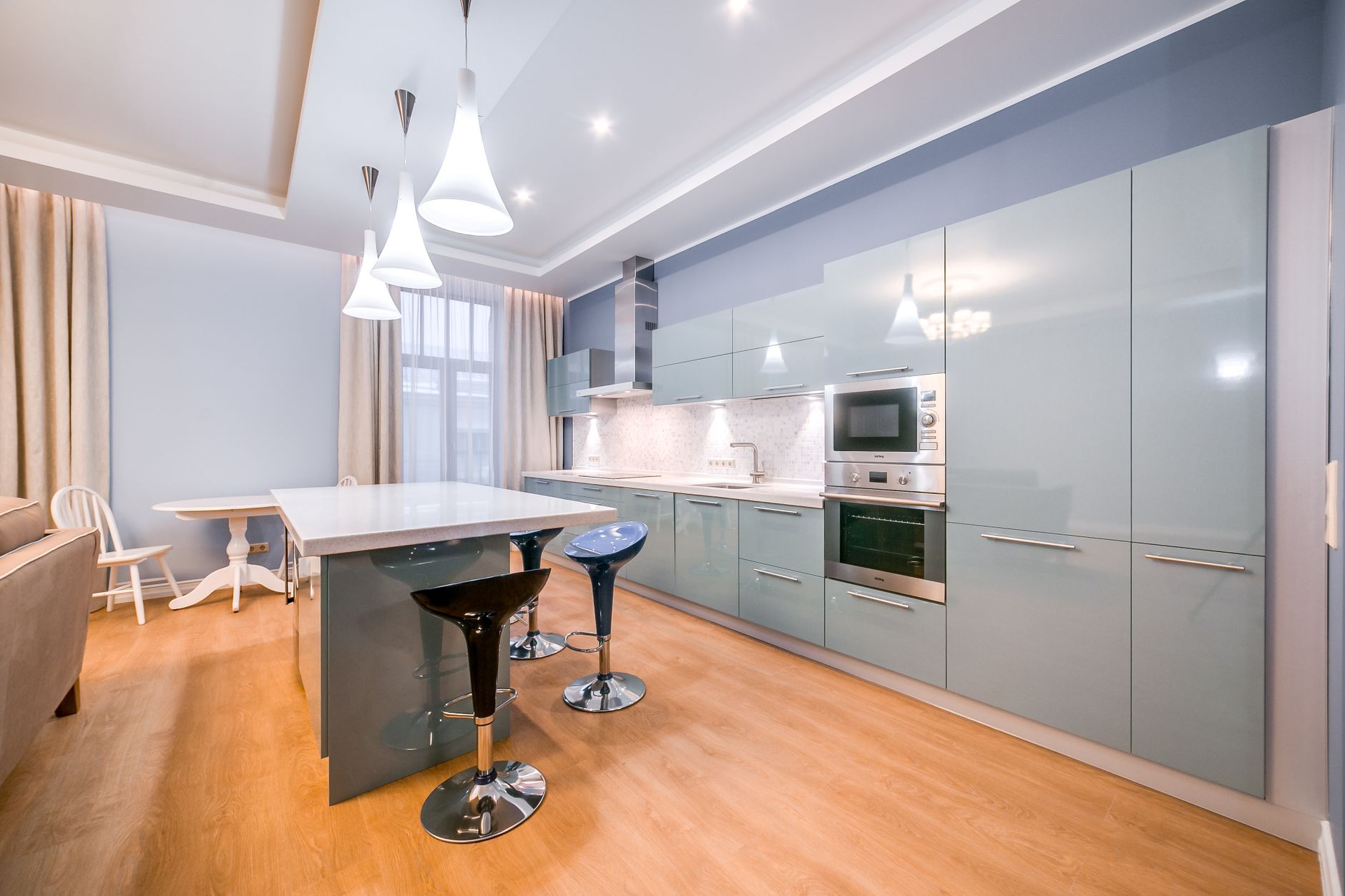
A pull that looks too short is the usual mistake
Most people choose pulls by finish and style and then discover on installation day that the length looks wrong. A pull that seemed generous in a photograph looks lost on a wide drawer, and a long pull on a narrow drawer looks like it is about to fall off. Proportion between a pull and the front it sits on is the subject here, and it can be settled with a few simple ratios before anything is bought.
Measuring the pull properly
Two numbers describe every pull. The center-to-center measurement is the distance between the two screw holes. The overall length is the full end-to-end size. For proportion, overall length is the number to compare against the width of the drawer, since it is the part the eye sees.
A bar pull with a four-inch center-to-center spacing is roughly five and a half inches long overall, depending on the end design. Always check the product sheet, because manufacturers differ, and an extra inch matters on a small door.
The one-third guideline
A good starting point is a pull whose overall length is about one third of the drawer front width. On a twenty-four-inch drawer, that gives a pull of around eight inches overall. On a fifteen-inch drawer, a five-inch pull. This is a guideline, not a law, and it reflects what most eyes find comfortable.
- A pull shorter than a quarter of the width starts to look timid.
- A pull longer than half the width starts to dominate the drawer.
- Between those two limits there is room for personal taste.
Modern slab-front kitchens often push toward the long end, with pulls running half the drawer width or more, because the flat surface can carry a strong horizontal line. Traditional kitchens with raised panels and detailed profiles usually prefer shorter, more modest pieces.
Narrow drawers and small doors
For a drawer under twelve inches wide, a small knob or a short pull of around three inches works best. A long bar on a narrow front would extend almost to the edges, and there is no room for the hand to move around it. A knob avoids the issue altogether and saves the trouble of matching spacing.
On doors, the height of the pull matters as much as the width of the door. A pull more than a third of the door height starts to look oversized, and a pull on a narrow door that runs from the top corner nearly to the middle will look heavy.
Wide drawers: one long pull or two
Once a drawer passes about thirty inches, a single pull has to be very long to stay in proportion, and the hand grips it at one point only, which makes opening a heavy drawer uneven and can twist the box on its slides. Two pulls solve this. They are placed symmetrically, usually at about a quarter and three quarters of the width, and they share the load of opening.
The same logic applies to a long continuous pull, such as a bar that runs most of the drawer width. It gives an even grip and a strong visual line, and it suits modern style, though the longer lengths are usually special order.
Spacing two pulls
For two pulls on one front, measure the width, divide it into four equal sections and mark the quarter points. The center of each pull sits on a mark. Check that the distance from each pull's end to the edge of the drawer is roughly equal to the gap between the two pulls, or slightly less, so the pattern looks balanced.
Drawer depth and height
A tall drawer front, such as a deep pot drawer, can carry a longer pull or a larger bar without looking out of scale. A shallow drawer, such as a cutlery tray front that is only four inches high, is limited by height more than width. A pull that is thick or deep may crowd the edge, and a slim bar profile suits it better.
Projection, meaning how far the pull stands out from the front, also needs attention. A deep projection snags clothing and bumps hips in narrow aisles. A good projection for kitchen use is around an inch and a half or a bit less.
Matching sizes in a set
It is tempting to choose one size and use it everywhere. The result is a kitchen where narrow drawers look overwhelmed and wide ones look underdressed. A better approach is to choose two or three sizes from one family: a small one for narrow drawers and doors, a medium for standard drawers, and a large one for wide drawers and appliance fronts. They share a style and finish, but their lengths scale.
- List every drawer by width.
- Group them into narrow, standard and wide.
- Assign a length to each group, using the one-third guideline.
- Check that the family offers all those sizes in the finish you like.
Keeping center-to-center spacing consistent within a drawer row means that stacks of drawers still align at the middle, even when sizes differ by width.
Appliance fronts and oversized pulls
Dishwasher panels, refrigerator panels and wide range-side drawers can take oversized pulls, sometimes twelve inches or more. These are sold as appliance pulls with heavy-duty mounting. They must be fixed through the whole thickness of the panel with long screws, because the leverage on them is greater than on a normal pull. If the front is a thin decorative panel, a backing plate or spreader inside may be needed.
Weight and grip
Pull thickness affects feel. A very thin wire pull is elegant but is hard on the fingers when opening a heavy drawer. A thicker bar of around a half inch in diameter spreads the load comfortably. For households with older members, a larger, easy-grip pull is a wise choice, and a longer pull gives more room for the hand to find a purchase.
Also check the space behind the pull. The gap between the back of the bar and the cabinet face should be at least an inch for fingers to pass through, and a bit more for people with large hands.
Test with paper templates
Printed or cut paper templates of the pull, stuck to the drawer with removable tape, show the proportion at full scale. Place them on the widest and narrowest drawers and step back. Photographs taken from standing height are also useful, since a phone camera often reveals a proportion problem that is hard to see up close.
Quick reference
- Narrow drawers under twelve inches: a knob or a pull of about three inches.
- Standard drawers around eighteen to twenty-four inches: pulls of around five to eight inches overall.
- Wide drawers over thirty inches: two pulls, or one very long bar.
- Appliance panels: oversized pulls with through-bolted mounting.
Proportion is not an exact science, but the one-third guideline, the use of two pulls on wide fronts and a size family that scales with the drawers will produce a kitchen where the hardware looks like it belongs.